
How EzSecure Helps Organisations Achieve DPDP Compliance Through Data Visibility
- Dec 15, 2025
- 4 min read

Introduction
The Digital Personal Data Protection Act has created a new responsibility for Indian organisations. Compliance is no longer only about policies and documentation. It demands a clear understanding of how personal data moves, where it is stored and whether it is governed properly at every stage.
Most companies believe their data is centralised in a few trusted systems. But when they begin preparing for DPDP, they realise that personal information often exists in many places that teams do not track regularly. Files stored in shared folders, exports created during quick analysis, cloud copies generated during collaboration and older documents saved on employee devices create gaps that make compliance harder than expected.
DPDP compliance becomes challenging not because the law is complex but because organisations lack visibility into their own data.
This is where EzSecure makes a meaningful difference.
Why DPDP Requires Complete Data Visibility
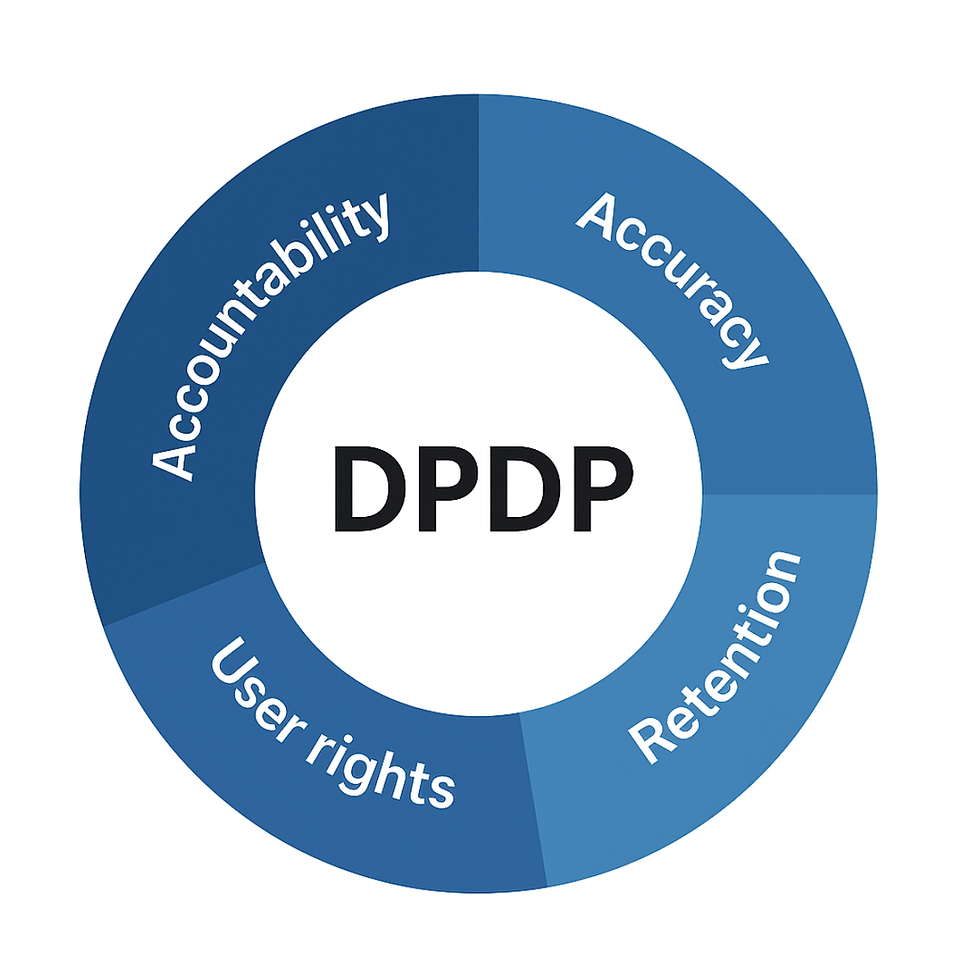
The DPDP Act is built on principles that depend heavily on knowing where personal data exists. Without visibility, even well intentioned organisations struggle to meet basic expectations.
The Act requires companies to collect data for a lawful purpose, use it within that purpose and delete it when the purpose ends. It expects accuracy so that individuals can request corrections. It requires organisations to honour user rights such as access, consent withdrawal and data erasure. It also places accountability on organisations to demonstrate that they manage personal information responsibly.
All of these requirements sound straightforward, but they break down the moment an organisation does not know where every version of the data is stored.
If personal information is sitting unnoticed in old folders or in unmonitored cloud storage, the organisation cannot prove deletion, cannot ensure accuracy and cannot guarantee that it is being retained legally. This creates direct compliance risk.
DPDP does not demand perfection.
It demands awareness.
The Visibility Gap Inside Organisations
Many companies discover during compliance preparation that their data landscape is far more complex than expected. Personal information often appears in locations outside official systems. These include project archives, downloaded reports, shared drives created for temporary work and email attachments that remain stored long after the task is completed.
These copies are not the result of negligence. They are the natural outcome of modern digital work. Teams collaborate quickly, information moves between tools and files are saved for convenience. Over time, this creates a set of untracked data that is difficult to manage.
When DPDP requires proof of deletion or retention, these forgotten files become the most difficult part of compliance. The organisation cannot govern what it cannot see.

How EzSecure Helps Organisations Build the Visibility DPDP Requires

EzSecure focuses on one essential capability that supports DPDP compliance. It helps organisations understand where personal and sensitive data is stored across their environment. It simply identifies where files exist, so teams can manage them correctly.
Many organisations discover that personal data appears in places they didn’t expect. Files in cloud collaboration folders often carry a medium to high compliance risk because they may contain information such as names or contact details. These locations connect directly to DPDP principles like purpose limitation and retention.
Shared team folders commonly hold older documents that still contain personal data. Because access is usually broad, these locations carry a high risk and relate strongly to DPDP’s accountability and minimisation expectations.
Exports saved during analysis may include sensitive information such as email addresses or phone numbers. These copies are difficult to track and introduce risk under DPDP’s retention and access control requirements.
Archived project material can also contain sensitive information, and DPDP treats these files as active responsibilities even if they haven’t been reviewed for a long time.
EzSecure gives organisations a clear view of these locations so they can understand the risk level, identify which DPDP requirement applies and take the right action. This visibility helps teams remove unnecessary data, manage retention more confidently and strengthen their compliance posture.
Why Data Discovery Strengthens Compliance Efforts
DPDP compliance is not only about avoiding penalties. It is about building a responsible, predictable and trustworthy data environment. When organisations have complete visibility, they can manage personal data in a way that aligns with both regulatory expectations and user trust.
By identifying where data exists, organisations can
• reduce unnecessary storage
• eliminate outdated or duplicate files
• prevent accidental over retention
• improve accuracy of stored information
• maintain stronger internal governance
• respond faster to requests from users or regulators
Data discovery acts as the foundation for all other compliance activities. Policies, controls and security measures work effectively only when the organisation knows its data.
Conclusion
DPDP introduces clear responsibilities for how organisations must handle personal data. These responsibilities become achievable only when the organisation has a complete view of its data landscape. Most of the compliance gaps arise not from complex requirements but from the hidden locations where information lives unnoticed.
EzSecure helps organisations uncover this hidden data and build the visibility required to meet DPDP expectations with confidence. When leaders understand what data they have, where it is stored and how it is being used, compliance becomes far more manageable.
DPDP compliance begins with visibility, and visibility begins with discovery.EzSecure provides that essential foundation.


Comments